
Sub-Total: $0.00
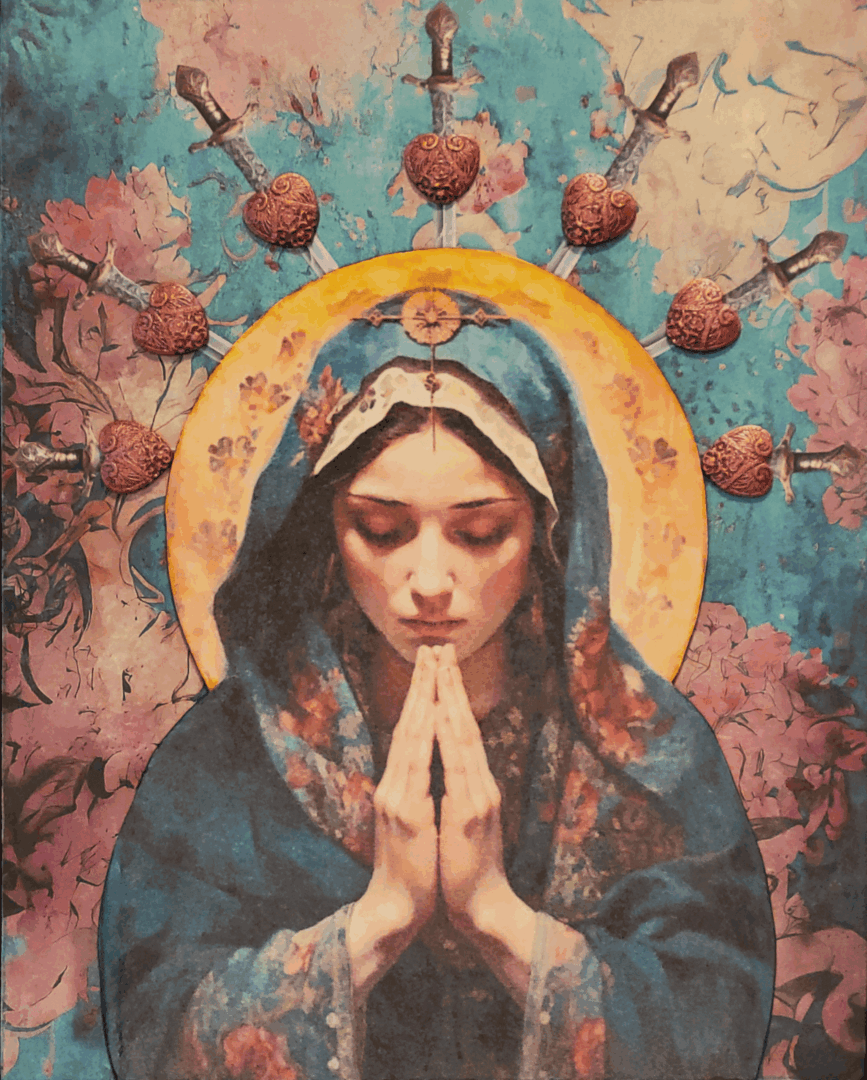
The Importance of Religious-Themed Art
Religious-themed art has been a cornerstone of human creativity for centuries, serving as a bridge between the divine and the earthly. It transcends mere aesthetics, offering profound insights into faith, culture, and the human condition. From ancient cave paintings to modern interpretations, religious art continues to inspire awe and reflection.
A Journey Through History
Religious art has its roots in humanity’s earliest attempts to connect with the sacred. Ancient civilizations, such as the Egyptians and Mesopotamians, adorned their temples with intricate carvings and statues of deities, symbolizing their reverence and devotion. These early works were not just decorative but deeply spiritual, embodying the beliefs and values of their creators.
The Middle Ages saw a flourishing of religious art in the form of illuminated manuscripts, stained glass windows, and grand cathedrals. Iconic works like the mosaics of Ravenna and the Gothic architecture of Notre Dame were designed to inspire worshippers and elevate their spirits. During this period, art became a vital tool for storytelling, conveying biblical narratives to largely illiterate populations.
The Renaissance marked a golden age for religious art, with masters like Michelangelo, Leonardo da Vinci, and Raphael creating timeless masterpieces. Works such as the Sistine Chapel ceiling and The Last Supper combined technical brilliance with profound spiritual themes, reflecting the era’s renewed focus on humanism and divine beauty.
Themes and Symbolism
Religious art often explores universal themes such as creation, redemption, and the struggle between good and evil. Symbolism plays a crucial role, with colors, shapes, and figures carrying deep spiritual meanings. For instance, the use of light in Christian art often symbolizes divine presence, while the lotus flower in Buddhist art represents purity and enlightenment.
Across cultures, religious art serves as a visual language, transcending barriers of time and geography. Hindu temples are adorned with intricate carvings of gods and goddesses, each telling a story of cosmic balance and morality. Islamic art, with its emphasis on geometric patterns and calligraphy, reflects the infinite nature of Allah and the unity of creation.
Modern Interpretations
Modern-day artists continue to create religious art as it has deep and rich history. In contemporary times, religious art evolved to include diverse mediums and perspectives. Artists like Marc Chagall and Salvador Dalí have reimagined traditional themes through surrealism and abstraction, offering fresh interpretations of faith and spirituality. Meanwhile, street art and digital media have brought religious imagery into public spaces, making it accessible to a broader audience.
Modern religious art often grapples with complex questions about identity, morality, humanity and the role of faith in a rapidly changing world. It challenges viewers to reflect on their beliefs and consider new ways of understanding the divine.
Why Religious Art Matters
Religious-themed art is more than just a visual experience; it is a testament to humanity’s enduring quest for meaning and connection. It invites us to explore the mysteries of existence, to find solace in beauty, and to celebrate the diversity of spiritual expression.
Whether you’re admiring the serene smile of a Buddha statue, the vibrant hues of a Hindu mural, or the intricate details of a medieval altarpiece, religious art has the power to move and inspire. It reminds us that, despite our differences, we share a common desire to seek the sacred and express it through creativity.
Religious-themed art is a timeless dialogue between humans and the divine, a conversation that continues to evolve and resonate as we engage in these works. We not only honor the past but also enrich our understanding of the present and the possibilities of the future.

Recent Posts
- Strange & Beautiful – An International Juried Online Exhibition, Palm Gallery, Los Angeles, California 10/08/2026
- Polymer Clay as Fine Art: Rethinking a Misunderstood Medium 06/23/2026
- Creating AI Art: Why It’s More Than Just Pushing a Button 04/08/2026
- Art as Legacy: Creating a Timeless Imprint 01/29/2026
- How Artists Influence One Another: The Creative Chain Reaction 12/08/2025
Categories
- Uncategorized (9)